Research Article | | Peer-Reviewed

Off-Pump Coronary Artery Bypass Grafting in Senegal: Initial Experience from a Tertiary Cardiovascular Center

Received: 23 November 2025     Accepted: 26 December 2025     Published: 20 January 2026
Views:       Downloads:
Abstract

Background: Off-pump coronary artery bypass (OPCAB) is a surgical alternative to conventional coronary artery bypass grafting (CABG) under cardiopulmonary bypass (CPB), offering early benefits in terms of reduced morbidity and faster recovery. However, its use remains limited in sub-Saharan Africa due to insufficient access to technical equipment, despite its lower overall cost compared to on-pump surgery. Objective: To assess the feasibility and immediate outcomes of OPCAB surgery in a resource-limited African setting. Methods: A retrospective review was conducted on four consecutive patients with symptomatic triple-vessel coronary artery disease who underwent OPCAB between January and November 2025. Median sternotomy, Maquet® stabilizers, intraluminal coronary shunts, and arterial and venous grafts were used. Perioperative and short-term postoperative outcomes were analyzed. Results: The mean patient age was 54.8 years. Comorbidities included hypertension (100%), type 2 diabetes (75%), and dyslipidemia (100%). Eleven distal anastomoses were performed, averaging 2.75 per patient. No conversion to cardiopulmonary bypass was required. One patient experienced a non-fatal myocardial infarction postoperatively; others had uneventful recoveries. All patients were discharged after an average hospital stay of 9 days and remained asymptomatic at 2-month follow-up. Conclusion: OPCAB surgery is feasible and safe in a sub-Saharan African tertiary center, even in a high-risk population. This technique offers promise as a cost-effective alternative to on-pump bypass in low-resource environments, pending appropriate training and basic surgical infrastructure.

Published in International Journal of Cardiovascular and Thoracic Surgery (Volume 12, Issue 1)
DOI 10.11648/j.ijcts.20261201.11
Page(s) 1-8
Creative Commons

This is an Open Access article, distributed under the terms of the Creative Commons Attribution 4.0 International License (http://creativecommons.org/licenses/by/4.0/), which permits unrestricted use, distribution and reproduction in any medium or format, provided the original work is properly cited.

Copyright

Copyright © The Author(s), 2026. Published by Science Publishing Group

Keywords

Coronary Artery Bypass Grafting, Off-Pump, Senegal, Cardiopulmonary Bypass, Cardiac Surgery

1. Introduction
Myocardial revascularization by coronary artery bypass grafting (CABG) remains the gold standard treatment for multivessel coronary artery disease, particularly in patients with major cardiovascular risk factors. Traditionally performed under cardiopulmonary bypass (CPB), CABG is associated with several perioperative and postoperative complications, including neurological events, inflammatory responses, hemorrhagic risks, and myocardial dysfunction related to aortic cross-clamping . In Senegal, the first CPB-assisted CABG procedures were performed in 2009, but it was only from 2019 onwards that this activity became structured and regularly performed within the Department of Cardiovascular Surgery at Fann University Hospital in Dakar, marking a milestone in the surgical management of ischemic heart disease. In this context, off-pump coronary artery bypass (OPCAB) has emerged as a promising alternative aimed at reducing the morbidity and mortality associated with CPB. Enabled by technological advancements (stabilizers, coronary shunts), OPCAB permits complete myocardial revascularization on a beating heart while preserving hemodynamic stability. Several randomized controlled trials (ROOBY, CORONARY) and meta-analyses have compared outcomes between on-pump and off-pump CABG. While long-term results appear similar in terms of survival and revascularization, OPCAB offers significant early benefits, including reduced transfusion requirements, fewer infectious and neurocognitive complications, and shorter intensive care unit stays . Despite these theoretical advantages, the adoption of OPCAB remains limited in many centers, particularly in sub-Saharan Africa, due to the high cost of specialized equipment and a steep technical learning curve. In this study, we present the first Senegalese case series of four patients successfully treated with OPCAB in Senegal. Our aim is to evaluate the feasibility, safety, and early clinical outcomes of this technique in a resource-constrained environment.
2. Materials and Methods
This retrospective descriptive study included the first four consecutive cases of off-pump coronary artery bypass grafting (OPCAB) performed between January and November 2025 in the Department of Thoracic and Cardiovascular Surgery at Fann University Hospital Center in Dakar. The objective was to evaluate the technical feasibility, intraoperative safety, and early clinical outcomes of this surgical approach in a resource-limited hospital setting. The patients included presented with symptomatic triple-vessel coronary artery disease, with surgical indications confirmed during a multidisciplinary team meeting. Left ventricular systolic function was either preserved (LVEF ≥ 50%) or moderately impaired (approximately 40%), without signs of preoperative hemodynamic instability. Informed consent was obtained from all patients after comprehensive explanations of the procedure and associated risks. The preoperative work-up was standardized and included an electrocardiogram (ECG) and transthoracic echocardiography (TTE) to assess ventricular function, segmental wall motion, filling pressures, and the presence of any ischemic mitral regurgitation. Coronary angiography was used to assess lesion severity and distribution. Chest X-ray, pulmonary function testing, and Doppler ultrasound of the supra-aortic trunks were systematically performed. Laboratory tests included a complete blood count, serum electrolytes, creatinine, liver function tests, coagulation profile, viral serologies (HIV, HBV, HCV), and blood typing. Preoperative consultations were also carried out in anaesthesiology, otolaryngology, and dentistry to complete the assessment. The decision to perform OPCAB was driven by the intent to reduce CPB-related complications, particularly neurological, renal, and inflammatory events. This strategy was validated during a multidisciplinary team meeting, taking into account patient comorbidities, baseline condition, and technical feasibility.
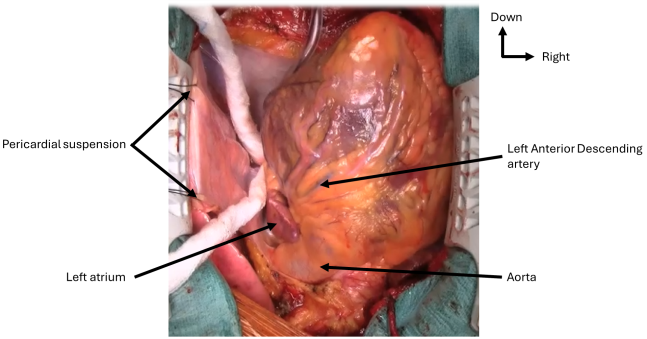
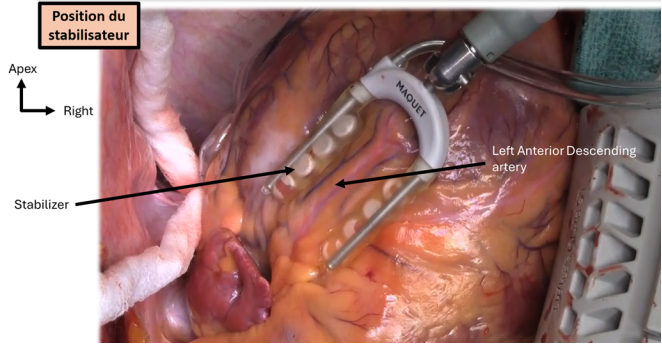
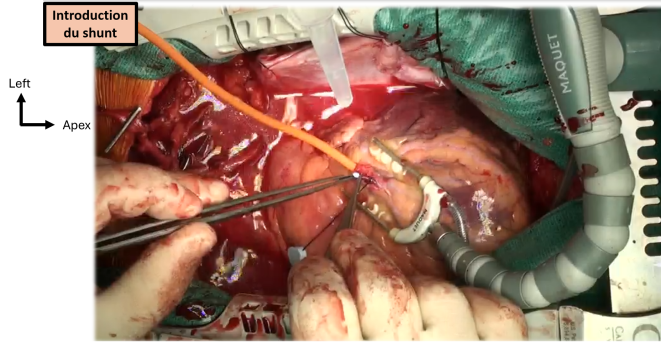
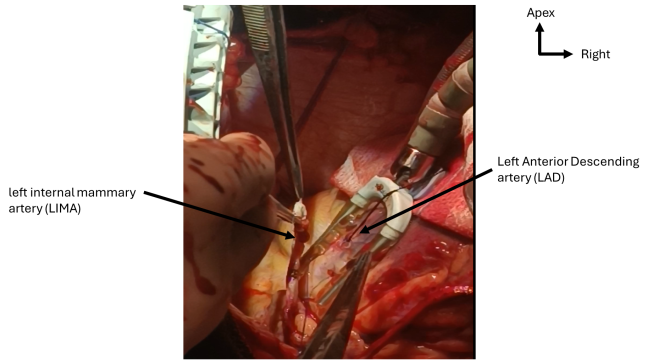
All procedures were performed under general anaesthesia with standard monitoring, orotracheal intubation, placement of central and peripheral venous lines, arterial catheterization, nasopharyngeal and urinary catheters. A cell-saver system was systematically used for intraoperative blood recovery for minimizing intraoperative blood loss and the need for transfusions. The surgical approach was a median sternotomy. Conduits included the left internal mammary artery (LIMA), harvested either skeletonized or pedicled; the right internal mammary thoracic artery (RIMA), used as a free graft; and the great saphenous vein (GSV), harvested, reversed, and dilated with heparinized saline. Internal thoracic arteries were soaked in papaverine solution (20 mg/20 mL). After pericardial opening, suspension sutures were placed along the left pericardial edge to improve exposure of the left anterior descending (LAD) and marginal arteries. (Figure 1). Systemic heparin was administered at half the dose required for CPB, targeting an activated clotting time (ACT) above 250 seconds. Mechanical myocardial stabilization (Figure 2) was achieved with the Epic® stabilizer (Maquet®), positioned under guidance in coordination with the anaesthesiologist to ensure optimal hemodynamic stability. A coronary snare was placed approximately 1 cm proximal to the target site using a 4/0 Prolene® U-stitch around the coronary artery. After arteriotomy, the snare was gently tightened to limit bleeding and facilitate insertion of an intraluminal coronary shunt (Figure 3), ensuring continuous distal perfusion during the anastomosis. Regarding revascularization, Anastomoses began with the LAD, grafted with the LIMA using 8/0 Prolene® (Figure 4) in three patients. In two cases, a Y-graft configuration was created using the RIMA as a free graft from the LIMA using 8/0 Prolene®. In another case, a sequential graft was constructed with the GSV using 7/0 Prolene®. The shunt was removed at the end of each anastomosis. Sternal closure was completed with the placement of pericardial and retrosternal drains, along with pleural drains if needed. Postoperatively, all patients were monitored in the intensive care unit with continuous hemodynamic surveillance, arterial blood gas analysis, lactate levels, and cardiac enzymes (troponin). Extubation was planned from the second postoperative hour for hemodynamically stable patients. Acetylsalicylic acid (aspirin) was administered six hours after surgery, followed by progressive reintroduction of other medical therapies (including angiotensin-converting enzyme inhibitors, statins, beta-blockers, antiarrhythmics, antihypertensives) as indicated. A control transthoracic echocardiogram was performed on the same day of surgery. Patients were followed up at postoperative day 15 in outpatient consultation with clinical and echocardiographic reassessment.
3. Results
Four patients were included in this series (Table 1): three men aged 44, 53, and 60 years respectively, and one woman aged 62 years, with a mean age of 54.8 years. All patients presented with symptomatic three-vessel coronary artery disease, revealed by stable angina or exertional dyspnea. All individuals exhibited multiple major cardiovascular risk factors. Hypertension was present in all four patients, with two having a history longer than 10 years. Type 2 diabetes mellitus was documented in three patients, two of whom had poor glycemic control. Mixed dyslipidaemia was present in all four patients, three were on statin therapy. Two patients were former smokers with over 20 pack-years of exposure. None of the patients had a family history of premature coronary artery disease or prior cardiac surgery. Clinical symptoms included stable exertional angina in all four patients and exertional dyspnea classified as NYHA class II or III in two. Vital signs were stable on admission, with an average blood pressure of 132/78 mmHg and heart rates between 56 and 84 bpm. No patients were obese (BMI < 30 kg/m²). Electrocardiograms showed signs of chronic ischemia in all patients, with repolarization abnormalities such as T-wave inversion or flattening in anterior, lateral, or inferior leads. One patient had a first-degree atrioventricular block, and another showed diffuse low voltage. No arrhythmias or conduction disturbances were noted. Coronary angiography confirmed triple-vessel disease in all cases, indicating a need for complete revascularization. Lesions included diffuse LAD disease, ostial stenosis of diagonal and marginal branches, and diffuse or segmental lesions of the right coronary artery (RCA), with variable dominance patterns. Transthoracic echocardiography showed preserved LVEF (≥50%) in three patients and moderate impairment (~40%) in one. Regional wall motion abnormalities were observed in three cases. One patient had moderate functional mitral regurgitation, with no indication for concomitant valvular surgery. No significant pericardial effusion, elevated filling pressures, or pulmonary hypertension were detected. The EuroSCORE II ranged from 1 to 2.8, indicating low-to-moderate surgical risk. Preoperative laboratory testing was largely unremarkable, except for one patient with elevated HbA1c. One patient had a positive, asymptomatic anti-HCV serology. Pulmonary function tests were normal in three patients; the fourth showed mild restrictive changes. Carotid Doppler studies revealed non-obstructive atherosclerotic plaques.
Table 1. Characteristics of Patients Undergoing Off-Pump Coronary Artery Bypass Grafting.

Characteristics

Patient 1

Patient 2

Patient 3

Patient 4

Age (years)

60

53

44

62

Sex

Male

Male

Male

Female

Hypertension

Yes

Yes

Yes

Yes

Type 2 Diabetes

Yes

Yes

No

Yes

Elevated HbA1c (>7%)

No

No

No

Yes

Dyslipidaemia

Yes

Yes

Yes

Yes

Former smoker

Yes

No

Yes

No

Clinical presentation

Effort angina

NYHA Class II dyspnea

Stable angina

NYHA Class III dyspnea

BMI < 30 kg/m²

Yes

Yes

Yes

Yes

Sinus rhythm on ECG

Yes

Yes

Yes

Yes

All patients underwent OPCAB surgery via median sternotomy under general anaesthesia with standard monitoring. Myocardial exposure was facilitated by pericardial suspension. Arterial grafts were prioritized, with Y-grafts constructed using the RIMA in three patients. In one case, a sequential saphenous vein graft was used due to inadequate LIMA flow. Maquet® mechanical cardiac stabilizers provided sufficient exposure without necessitating conversion to cardiopulmonary bypass (CPB). After arteriotomy, intraluminal shunts were used in all anastomoses to preserve distal perfusion. A total of 11 anastomoses were performed, averaging 2.75 per patient. per patient. The LAD was grafted in all cases, primarily using the LIMA. Additional targets included the obtuse marginal, diagonal, and RCA branches (Table 2). No conversion to CPB was required. Haemostasis was satisfactory in all cases. No patient required intraoperative blood transfusion, and no excessive bleeding was reported and the cell-saver system brought back an average of 400 cc. Sternal closure was performed with placement of retrosternal, pericardial, and pleural drains as needed.
Table 2. Operative Data.

Characteristics

Patient 1

Patient 2

Patient 3

Patient 4

Surgical approach

Median sternotomy

Median sternotomy

Median sternotomy

Median sternotomy

Type of anaesthesia

General

General

General

General

Main graft

LIMA

LIMA

LIMA

Additional grafts

RIMA in Y

RIMA in Y

None

Sequential saphenous vein

Number of distal anastomoses

3

3

2

3

Revascularized targets

LAD, OM, RCA

LAD, Marginal, diagonal

LAD, OM

LAD, diagonal, Marginal

Cardiac stabilizer used

Maquet® Epic

Maquet® Epic

Maquet® Epic

Maquet® Epic

Intraluminal shunt use

Yes

Yes

Yes

Yes

LIMA= left internal mammary artery, RIMA= right internal mammary artery, RITA in Y= configured in a Y-graft from the LITA, LAD= left anterior descending artery, RCA= right coronary artery.
No major immediate intraoperative complications (such as excessive bleeding, hemodynamic instability, poorly tolerated arrhythmia) were observed. However, one patient undergoing triple bypass with the saphenous vein experienced ventricular fibrillation with cardiac arrest following sternal closure. This was promptly managed with successful resuscitation. The likely etiology was mechanical graft compression graft compression during sternal closure. The other patients had no major intraoperative complications. All patients were extubated within six hours postoperatively. The mean ICU stay was 2.5 days. Two patients had moderate troponin elevations without clinical consequences. All remained hemodynamically and respiratorily stable, with preserved or improved ventricular function. Neurological monitoring was unremarkable. Drains were removed by postoperative day 2. Three patients had uneventful postoperative courses. In the patient who experienced intraoperative ventricular fibrillation, postoperative echocardiography revealed an apical thrombus, requiring therapeutic anticoagulation. All patients were transferred to the surgical ward after stabilization. The mean total hospital stay was 9 days (Table 3). No case of reoperation, wound infection, or in-hospital death was recorded. After a mean follow-up of two months, all patients were asymptomatic and clinically stable. Echocardiography confirmed preserved left ventricular function and the absence of new valvular pathology. At three months, all patients continued cardiac rehabilitation with good adherence to guideline-directed medical therapy.
Table 3. Immediate Postoperative Outcomes.

Characteristics

Patient 1

Patient 2

Patient 3

Patient 4

Conversion to CPB

No

No

No

No

Intraoperative complications

No

No

No

VF + resuscitated cardiac arrest

Postoperative intubation duration (hrs)

4

6

4

6

ICU stay (days)

2

3

2

3

Significant troponin elevation

No

Yes (moderate)

No

Yes (marked)

Postoperative complications

No

No

No

Acute MI, apical thrombus

Hemodynamic evolution

Stable

Stable

Stable

Stable after resuscitation

Neurological monitoring

Normal

Normal

Normal

Normal

Total hospital stays (days)

9

10

8

10

CPB= cardiopulmonary bypass, VF= Ventricular Fibrillation, ICU= Intensive Care Unit.
4. Discussion
Our series of four patients undergoing off-pump coronary artery bypass grafting (OPCAB) demonstrates promising results in terms of technical feasibility, hemodynamic tolerance, and early postoperative outcomes. No conversion to cardiopulmonary bypass (CPB) was required and the average number of distal anastomoses (2.75) aligns with published international benchmarks, which range from 2.3 to 3.7 depending on surgical experience and center volume . The patients selected were high-risk, presenting with symptomatic triple-vessel coronary artery disease and multiple comorbidities, including hypertension, diabetes, dyslipidemia, and a history of tobacco use. Such a profile supports the rationale for opting for OPCAB, which has shown benefit in patients at increased risk from CPB-related complications, such as those with ventricular dysfunction, calcified aortas, or significant systemic comorbidities . In terms of outcomes, our results, including zero in-hospital mortality, early extubation, short ICU stays (mean 2.5 days), and no need for transfusion, mirror those from high-volume international centers. Matei et al., in a cohort of 746 patients, reported a mortality rate of 0.26%, atrial fibrillation in 12.6%, extubation within 24 hours in 94.7%, and hospital stays under 8 days in more than 90% of cases . These results reflect the effectiveness of the off-pump coronary artery bypass (OPCAB) technique in the setting of experienced centers. In contrast, outcomes reported from African centers remain more variable. A 2022 meta-analysis compiling 42 African studies across all forms of CABG reported an early mortality rate of 3.51% and overall mortality of 3.73% . A South African study specifically examining OPCAB in elderly high-risk patients found hospital mortality at 2.6% . In this context, our 0% operative mortality and low complication rates represent a significant achievement, particularly in a resource-limited setting. Nevertheless, the limited sample size and relatively short follow-up period warrant cautious interpretation. Several clinical features of our cohort are worth highlighting. Our results also underscore the importance of surgical technique and graft strategy. Arterial revascularization was prioritized in all cases, with LIMA used systematically for LAD grafting, and Y-grafts incorporating RIMA used in 75% of patients. This is consistent with current recommendations emphasizing arterial conduits for improved long-term graft patency and survival . Moreover, technical refinements (such as pericardial suspension, use of mechanical stabilizers, and systematic intraluminal shunting) contributed to stable intraoperative conditions and minimized myocardial ischemia . Although one case of intraoperative ventricular fibrillation occurred following sternal closure — likely due to mechanical graft compression, prompt resuscitation and management avoided major sequelae. This complication, though rare, is well-documented in the literature and highlights the need for intraoperative vigilance and graft flow assessment before closure . Postoperatively, all patients were extubated within six hours and achieved hemodynamic stability without significant arrhythmias or respiratory compromise. Only two patients showed moderate troponin elevation without clinical impact. Neurological status remained intact throughout. At two-month follow-up, all patients remained asymptomatic with preserved ventricular function, and at three months, adherence to rehabilitation and medical therapy was excellent. Recent evidence reinforces the contemporary relevance of OPCAB, particularly in low-resource settings. A 2025 series on minimally invasive multivessel OPCAB (MICS-OPCAB) reported zero 30-day mortality, low rates of atrial fibrillation (18%), and hospital stays under 6 days, demonstrating that off-pump revascularization, even with limited incisions, can yield excellent perioperative outcomes . Innovations such as the anaortic OPCAB approach, which avoids aortic manipulation to reduce stroke risk, are also gaining ground . A recent comprehensive review concluded that OPCAB offers long-term survival and graft patency comparable to on-pump surgery, while preserving the early morbidity advantages of beating-heart revascularization . In resource-constrained environments like ours, the avoidance of CPB-related costs and infrastructure, along with faster recovery and fewer complications, makes OPCAB particularly attractive. Our experience confirms that, with adequate surgical training and basic technical support (stabilizers, shunts, arterial conduits), OPCAB can be safely implemented in sub-Saharan Africa and serve as a viable revascularization strategy. Our outcomes suggest that, with adequate training and appropriate technical resources, off-pump coronary artery bypass surgery is feasible and safe even in resource-limited African settings.
5. Conclusion
Our initial experience with off-pump coronary artery bypass grafting (OPCAB) in a resource-limited African setting confirms the technical feasibility, intraoperative safety, and favorable short-term outcomes, even among high-risk patients with multivessel disease. No operative mortality, conversion to CPB, or major complications were observed. These encouraging results support the further development of OPCAB as a cost-effective and pragmatic surgical option in low-resource environments. Scaling up its use will depend on appropriate surgeon training, structured case selection, and continued access to essential equipment. Larger prospective studies and long-term outcome data are needed to confirm graft durability and the impact on morbidity and mortality in this context.
Figures
Figure 1. Pericardial suspension.
Figure 2. Myocardial stabilization with Maquet© mechanical cardiac stabilizers.
Figure 3. Introduction of intraluminal shunts.
Figure 4. Anastomosis of the left anterior descending.
Abbreviations

CABG

Coronary Artery Bypass Grafting

OPCAB

Off-Pump Coronary Artery Bypass

CPB

Cardiopulmonary Bypass

LAD

Left Anterior Descending (Artery)

RCA

Right Coronary Artery

LIMA

Left Internal Mammary Artery

RIMA

Right Internal Mammary Artery

GSV

Great Saphenous Vein

ACT

Activated Clotting Time

ECG

Electrocardiogram

TTE

Transthoracic Echocardiography

ICU

Intensive Care Unit

NYHA

New York Heart Association

VF

Ventricular Fibrillation

MI

Myocardial Infarction

BMI

Body Mass Index

HbA1c

Hemoglobin A1c

HVC

Hepatitis C Virus

HIV

Human Immunodeficiency Virus

HBV

Hepatitis B Virus

Conflicts of Interest
The authors declare no conflicts of interest.
References
[1] Mack MJ, Sabik JF, et al. Cardiopulmonary Bypass and its complications. Cardiol Clin. 2003; 21(4): 567–589.
[2] Shroyer ALW, Grover FL, Hattler B, et al. On-pump versus off-pump coronary-artery bypass surgery. N Engl J Med. 2009; 361(19): 1827–1837.
[3] Lamy A, Devereaux PJ, Prabhakaran D, et al. Five-Year Outcomes after Off-Pump or On-Pump Coronary-Artery Bypass Grafting. N Engl J Med. 2016; 375(24): 2359–2368.
[4] Matei C, Gavra G, Billaud P, et al. Pontage coronaire à cœur battant. Aspects techniques et résultats hospitaliers. Ann Chir. 2002; 127(8): 639–646.
[5] Matkovic J, Driessen A, Nierich A, et al. Off-pump versus on-pump coronary artery bypass surgery in high-risk patients. Eur J Cardiothorac Surg. 2019; 56(1): 28–36.
[6] Akintoye E, Killu AM, Erqou S, et al. Outcomes of coronary artery bypass surgery in Africa: a systematic review. Int J Cardiol. 2023; 377: 71–79.
[7] Demirozu ZT, Scherman J, Tettey M, et al. Off-pump coronary artery bypass in high-risk African patients. World J Cardiovasc Surg. 2025; 13(2): 45–52.
[8] Taggart DP, Altman DG, Gray AM, et al. Randomized trial of bilateral versus single internal-thoracic-artery grafts. N Engl J Med. 2021; 385(17): 1650–1659.
[9] AlMawajdeh O, Kirmani BH, Sabry H, Muir AD. Initial Outcomes from a Minimally Invasive Cardiac Surgery–Off?Pump Coronary Artery Bypass Grafting (MICS?OPCAB) Programme: A Case Series of the First 50 Patients. Journal of Cardiovascular Development and Disease, 2025; 12: 456.
[10] Ushioda R, et al. Assessing the benefits of anaortic off?pump coronary artery bypass in reducing perioperative stroke risk. Frontiers in Cardiovascular Medicine, 2024; (study on anaortic OPCAB).
[11] Yoo KJ. The Past, Present, and Future of Off?Pump Coronary Artery Bypass Grafting. Journal of Chest Surgery, 2025; 58(4): 121–133.
Cite This Article
  • APA Style

    Diagne, P. A., Diop, M. S., Faye, C. A. K., Ba, P. O., Farhat, M., et al. (2026). Off-Pump Coronary Artery Bypass Grafting in Senegal: Initial Experience from a Tertiary Cardiovascular Center. International Journal of Cardiovascular and Thoracic Surgery, 12(1), 1-8. https://doi.org/10.11648/j.ijcts.20261201.11

    Copy | Download

    ACS Style

    Diagne, P. A.; Diop, M. S.; Faye, C. A. K.; Ba, P. O.; Farhat, M., et al. Off-Pump Coronary Artery Bypass Grafting in Senegal: Initial Experience from a Tertiary Cardiovascular Center. Int. J. Cardiovasc. Thorac. Surg. 2026, 12(1), 1-8. doi: 10.11648/j.ijcts.20261201.11

    Copy | Download

    AMA Style

    Diagne PA, Diop MS, Faye CAK, Ba PO, Farhat M, et al. Off-Pump Coronary Artery Bypass Grafting in Senegal: Initial Experience from a Tertiary Cardiovascular Center. Int J Cardiovasc Thorac Surg. 2026;12(1):1-8. doi: 10.11648/j.ijcts.20261201.11

    Copy | Download

  • @article{10.11648/j.ijcts.20261201.11,
      author = {Papa Amath Diagne and Momar Sokhna Diop and Cheikh Abdou Khadr Faye and Papa Ousmane Ba and Mehdi Farhat and Myriam Bizrane and Salma EL Yasmi and Papa Salmane Ba and Amadou Gabriel Ciss},
      title = {Off-Pump Coronary Artery Bypass Grafting in Senegal: Initial Experience from a Tertiary Cardiovascular Center},
      journal = {International Journal of Cardiovascular and Thoracic Surgery},
      volume = {12},
      number = {1},
      pages = {1-8},
      doi = {10.11648/j.ijcts.20261201.11},
      url = {https://doi.org/10.11648/j.ijcts.20261201.11},
      eprint = {https://article.sciencepublishinggroup.com/pdf/10.11648.j.ijcts.20261201.11},
      abstract = {Background: Off-pump coronary artery bypass (OPCAB) is a surgical alternative to conventional coronary artery bypass grafting (CABG) under cardiopulmonary bypass (CPB), offering early benefits in terms of reduced morbidity and faster recovery. However, its use remains limited in sub-Saharan Africa due to insufficient access to technical equipment, despite its lower overall cost compared to on-pump surgery. Objective: To assess the feasibility and immediate outcomes of OPCAB surgery in a resource-limited African setting. Methods: A retrospective review was conducted on four consecutive patients with symptomatic triple-vessel coronary artery disease who underwent OPCAB between January and November 2025. Median sternotomy, Maquet® stabilizers, intraluminal coronary shunts, and arterial and venous grafts were used. Perioperative and short-term postoperative outcomes were analyzed. Results: The mean patient age was 54.8 years. Comorbidities included hypertension (100%), type 2 diabetes (75%), and dyslipidemia (100%). Eleven distal anastomoses were performed, averaging 2.75 per patient. No conversion to cardiopulmonary bypass was required. One patient experienced a non-fatal myocardial infarction postoperatively; others had uneventful recoveries. All patients were discharged after an average hospital stay of 9 days and remained asymptomatic at 2-month follow-up. Conclusion: OPCAB surgery is feasible and safe in a sub-Saharan African tertiary center, even in a high-risk population. This technique offers promise as a cost-effective alternative to on-pump bypass in low-resource environments, pending appropriate training and basic surgical infrastructure.},
     year = {2026}
    }
    

    Copy | Download

  • TY  - JOUR
    T1  - Off-Pump Coronary Artery Bypass Grafting in Senegal: Initial Experience from a Tertiary Cardiovascular Center
    AU  - Papa Amath Diagne
    AU  - Momar Sokhna Diop
    AU  - Cheikh Abdou Khadr Faye
    AU  - Papa Ousmane Ba
    AU  - Mehdi Farhat
    AU  - Myriam Bizrane
    AU  - Salma EL Yasmi
    AU  - Papa Salmane Ba
    AU  - Amadou Gabriel Ciss
    Y1  - 2026/01/20
    PY  - 2026
    N1  - https://doi.org/10.11648/j.ijcts.20261201.11
    DO  - 10.11648/j.ijcts.20261201.11
    T2  - International Journal of Cardiovascular and Thoracic Surgery
    JF  - International Journal of Cardiovascular and Thoracic Surgery
    JO  - International Journal of Cardiovascular and Thoracic Surgery
    SP  - 1
    EP  - 8
    PB  - Science Publishing Group
    SN  - 2575-4882
    UR  - https://doi.org/10.11648/j.ijcts.20261201.11
    AB  - Background: Off-pump coronary artery bypass (OPCAB) is a surgical alternative to conventional coronary artery bypass grafting (CABG) under cardiopulmonary bypass (CPB), offering early benefits in terms of reduced morbidity and faster recovery. However, its use remains limited in sub-Saharan Africa due to insufficient access to technical equipment, despite its lower overall cost compared to on-pump surgery. Objective: To assess the feasibility and immediate outcomes of OPCAB surgery in a resource-limited African setting. Methods: A retrospective review was conducted on four consecutive patients with symptomatic triple-vessel coronary artery disease who underwent OPCAB between January and November 2025. Median sternotomy, Maquet® stabilizers, intraluminal coronary shunts, and arterial and venous grafts were used. Perioperative and short-term postoperative outcomes were analyzed. Results: The mean patient age was 54.8 years. Comorbidities included hypertension (100%), type 2 diabetes (75%), and dyslipidemia (100%). Eleven distal anastomoses were performed, averaging 2.75 per patient. No conversion to cardiopulmonary bypass was required. One patient experienced a non-fatal myocardial infarction postoperatively; others had uneventful recoveries. All patients were discharged after an average hospital stay of 9 days and remained asymptomatic at 2-month follow-up. Conclusion: OPCAB surgery is feasible and safe in a sub-Saharan African tertiary center, even in a high-risk population. This technique offers promise as a cost-effective alternative to on-pump bypass in low-resource environments, pending appropriate training and basic surgical infrastructure.
    VL  - 12
    IS  - 1
    ER  - 

    Copy | Download

Author Information
  • Department of Thoracic and Cardiovascular Surgery, Fann University Hospital Center, Dakar, Senegal


  • Department of Thoracic and Cardiovascular Surgery, Fann University Hospital Center, Dakar, Senegal

  • Department of Thoracic and Cardiovascular Surgery, Fann University Hospital Center, Dakar, Senegal

  • Department of Thoracic and Cardiovascular Surgery, Fann University Hospital Center, Dakar, Senegal

  • Department of Thoracic and Cardiovascular Surgery, Fann University Hospital Center, Dakar, Senegal

  • Department of Thoracic and Cardiovascular Surgery, Fann University Hospital Center, Dakar, Senegal;Department of Cardiovascular Surgery, Gabriel Montpied University Hospital, Clermont-Ferrand, France

  • Department of Thoracic and Cardiovascular Surgery, Fann University Hospital Center, Dakar, Senegal

  • Department of Thoracic and Cardiovascular Surgery, Fann University Hospital Center, Dakar, Senegal

  • Department of Thoracic and Cardiovascular Surgery, Fann University Hospital Center, Dakar, Senegal