
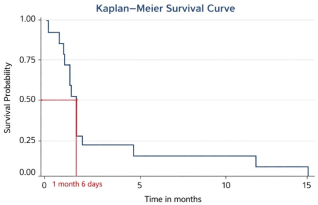
Background: Distal angioplasty has become a key therapeutic option for diabetic patients presenting with chronic limb-threatening ischemia (CLTI), particularly in settings where infrapopliteal, diffuse, and calcified lesions are predominant. Despite the growing burden of diabetes in sub-Saharan Africa, regional data remain scarce. Methods: This retrospective, single?center study included all diabetic patients who underwent distal angioplasty at Fann Hospital between January 2021 and December 2022. Clinical characteristics, cardiovascular risk factors, imaging findings, procedural techniques, and postoperative outcomes were analyzed. Results: Eighty-six patients were included (mean age 66.3 ± 7.5 years). Most presented with stage IV ischemia (84.88%). Type 2 diabetes was predominant (95.35%), with a mean duration of 14.3 years. CT angiography revealed multivessel distal disease in nearly all cases. Distal angioplasty was performed under local anesthesia in 96.52% of procedures, with antegrade puncture in 98.8%. A 3mm balloon was used in 87.2% of cases, and stenting was required in only one patient. Residual stenosis occurred in 10.47% of procedures and arterial dissection in 9.3%. Primary wound healing was achieved in 60.81% of patients, with a mean healing time of 4 months. Twenty-six amputations were performed (18 minor, 8 major). Overall mortality reached 17.4%, with hypertension significantly associated with death (p = 0.028). Median survival after angioplasty was 36 days. Conclusion: Distal angioplasty is feasible and effective in diabetic patients with severe lower?limb ischemia, even in resource-limited settings. However, high mortality highlights the need for comprehensive cardiovascular management, early PAD detection, and strengthened multidisciplinary care pathways to improve long-term outcomes.
| Published in | International Journal of Cardiovascular and Thoracic Surgery (Volume 12, Issue 5) |
| DOI | 10.11648/j.ijcts.20261205.11 |
| Page(s) | 113-121 |
| Creative Commons |
This is an Open Access article, distributed under the terms of the Creative Commons Attribution 4.0 International License (http://creativecommons.org/licenses/by/4.0/), which permits unrestricted use, distribution and reproduction in any medium or format, provided the original work is properly cited. |
| Copyright |
Copyright © The Author(s), 2026. Published by Science Publishing Group |
Distal Angioplasty, Diabetes, Chronic Limb-threatening Ischemia, Peripheral Arterial Disease
Epidemiological characteristics of the patients | |
|---|---|
Characteristics | Value |
Total number | 86 |
Mean age (years) | 66,3 ± 7,5 |
Age min-max (years) | 44-86 |
Male sex | 31 (36%) |
Female sex | 55 (64%) |
Cardiovascular risk factors | ||
|---|---|---|
Factor | Number | (%) |
Type 2 Diabetes | 82 | 95,35 |
Type 1 Diabetes | 4 | 4,65 |
Hypertension | 55 | 63,95 |
Smoking | 18 | 20,9 |
Alcohol consumption | 6 | 6,98 |
Patient history | ||
|---|---|---|
History | Number | (%) |
Lower-limb angioplasty | 9 | 10,5 |
Minor Amputation | 9 | 10,5 |
Miajor Amputation | 8 | 9,3 |
Ischemic heart disease | 6 | 7 |
Stroke | 4 | 4,7 |
Location of involvement | ||
|---|---|---|
Location | Number | (%) |
Right lower limb | 43 | 50 |
Left lower limb | 39 | 45,35 |
Bilateral | 4 | 4,65 |
Clinical stage of PAD | ||
|---|---|---|
Stage | Number | (%) |
IIb | 4 | 4,65 |
III | 9 | 10,5 |
IV | 73 | 84,88 |
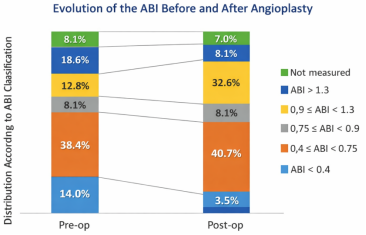
Preoperative ABI | ||
|---|---|---|
ABI | Number | (%) |
< 0,4 | 12 | 13,95 |
0,4 - 0,75 | 33 | 38,37 |
0,75 - 0,9 | 7 | 8,14 |
0,9-1,3 | 11 | 12,79 |
> 1,3 (medial calcification) | 16 | 18,6 |
Not measured | 7 | 8,14 |
Doppler ultrasound lesions | |||
|---|---|---|---|
Artery | Occlusion (%) | Stenosis (%) | Total |
Anterior tibial | 15 | 24,5 | 39,5 |
Posterior tibial | 13 | 20,7 | 33,7 |
Fibular | 10,7 | 16,1 | 26,8 |
CT angiography lesions | |||
|---|---|---|---|
Artery | Occlusion (%) | Stenosis (%) | Total |
Anterior tibial | 15 | 24,5 | 39,5 |
Fibular | 10,7 | 16,1 | 26,8 |
Technical characteristics of angioplasty | |
|---|---|
Parameter | Value (%) |
Local anesthesia | 96,52 |
Anterograde puncture | 98,8 |
Distal angioplasty alone | 42 |
Distal + femoropopliteal angioplasty | 44 |
3mm balloon | 87,2 |
Femoral stent | 1,16 (1 patient) |
Amputations | |||
|---|---|---|---|
Minor | Toes | 12 | 46,1 |
Forefoot | 6 | 23,1 | |
Major | Leg | 4 | 15,4 |
Thigh | 4 | 15,4 | |
Total | 26 | 100 | |
Cardiovascular risk factors/history and risk of complications | |||||
|---|---|---|---|---|---|
Risk factors | Number of complications | P-value | |||
0 | 1 | 2 | |||
Hypertension | Yes | 73,36 | 20 | 3,64 | 0,697 |
No | 83,87 | 12,9 | 3,23 | ||
Smoking | Yes | 83,33 | 16,67 | 0 | 0,652 |
No | 77,94 | 17,65 | 4,41 | ||
Alcohol consumption | Yes | 83,33 | 16,67 | 0 | 0,886 |
No | 78,75 | 17,5 | 3,75 | ||
Ischemic heart disease | Yes | 50 | 0 | 50 | 0,001 |
No | 79,27 | 17,07 | 3,66 | ||
Diabetes type | Type 1 | 75 | 25 | 0 | 0,864 |
Type 2 | 79,27 | 17,07 | 3,66 | ||
Diabetes duration (years) | < 5 | 75 | 25 | 0 | 0,123 |
6 - 10 | 66,67 | 13,33 | 20 | ||
11 - 15 | 92,31 | 7,69 | 0 | ||
16 - 20 | 78,26 | 21,74 | 0 | ||
21 - 30 | 80 | 20 | 0 | ||
>30 | 80 | 20 | 0 | ||
Cardiovascular risk factors and risk of death | ||||
|---|---|---|---|---|
Risk factors | Death | P-value | ||
Yes | No | |||
Hypertension | Yes | 28,26 | 71,74 | 0,028 |
No | 7,14 | 92,86 | ||
Smoking | Yes | 31,25 | 68,75 | 0,217 |
No | 17,24 | 82,76 | ||
Alcohol consumption | Yes | 50 | 50 | 0,128 |
No | 18,57 | 81,43 | ||
Ischemic heart disease | Yes | 50 | 50 | 0,289 |
No | 19,44 | 80,56 | ||
Diabetes type | Type 1 | 50 | 50 | 0,128 |
Type 2 | 18,57 | 81,43 | ||
Diabetes duration (years) | < 5 | 5,88 | 94,12 | 0,054 |
6 - 10 | 25 | 75 | ||
11 - 15 | 30,77 | 69,23 | ||
Clinical stages of PAD and risk of death | |||
|---|---|---|---|
Stages | Death | P-value | |
Yes | No | ||
Stage IIb | 0 | 100 | 0,06 |
Stage III | 42,86 | 57,14 | |
Stage IV | 17,74 | 82,26 | |
PAD | Peripheral Arterial Disease |
CLTI | Chronic Limb-Threatening Ischemia |
ABI | Ankle-Brachial Index |
TBI | Toe-Brachial Index |
CT | Computed Tomography |
BTK | Below-The-Knee |
PTA | Percutaneous Transluminal Angioplasty |
7F | 7 French (Introducer Size) |
MM | Millimeter |
IIb / III / IV | Leriche & Fontaine Clinical Stages |
| [1] | Conte MS, Bradbury AW, Kolh P, White JV, Dick F, Fitridge R, et al. Global vascular guidelines on the management of chronic limb-threatening ischemia. Eur J Vasc Endovasc Surg. 2019; 58(1 Suppl): S1-S109. e33. |
| [2] | Ferraresi P, Giurato L, et al. Long-term outcomes after angioplasty of isolated below-the-knee arteries in diabetic patients with critical limb ischaemia. Eur J Vasc Endovasc Surg. 2009; 37(3): 336-342. |
| [3] | Armstrong DG, Boulton AJM, Bus SA. Diabetic foot ulcers and their recurrence. N Engl J Med. 2017; 376(24): 2367-2375. |
| [4] | Hinchliffe RJ, Forsythe RO, Apelqvist J, et al. Guidelines on diagnosis, prognosis, and management of peripheral artery disease in patients with foot ulcers and diabetes (IWGDF 2019 update). Diabetes Metab Res Rev. 2020; 36(S1): e3276. |
| [5] | Atun R, Davies JI, Gale EAM, et al. Diabetes in sub-Saharan Africa: from clinical care to health policy. Lancet Diabetes Endocrinol. 2017; 5(8): 622-667. |
| [6] | Farber A, Menard MT, Conte MS, Kaufman JA, Powell RJ, Choudhry NK, et al. Surgery or Endovascular Therapy for Chronic Limb-Threatening Ischemia. N Engl J Med. 2022; 387(25): 2305-2316. |
| [7] | Jones WS, Dolor RJ, Hasselblad V, et al. Comparative effectiveness of endovascular and surgical revascularization for patients with critical limb ischemia: a systematic review. J Am Coll Cardiol. 2012; 60(22): 2140-2147. |
| [8] | Katsanos K, Kitrou P, Spiliopoulos S, et al. Comparative effectiveness of plain balloon angioplasty, bare metal stents, drug-coated balloons, and drug-eluting stents for the treatment of infrapopliteal artery disease: systematic review and Bayesian network meta-analysis of randomized controlled trials. J Endovasc Ther. 2016; 23(6): 851-863. |
| [9] | Faglia E, Dalla Paola L, Clerici G, et al. Peripheral angioplasty as the first-choice revascularization procedure in diabetic patients with critical limb ischemia: prospective study of 993 consecutive patients. Eur J Vasc Endovasc Surg. 2005; 29(6): 620-627. |
| [10] | Shin CS, Yoo KC. Predictive factors of wound healing and limb salvage after successful below-the-knee endovascular angioplasty in patients with diabetic foot ulcer: a retrospective study. Medicina (Kaunas). 2025; 61(2): 277. |
| [11] | Bekele F, Chelkeba L, Fekadu G. Risk factors and outcomes of diabetic foot ulcers in patients attending a tertiary care hospital in Ethiopia: a prospective observational study. BMC Endocr Disord. 2020; 20: 2. |
| [12] | Ameh EA, Mshelbwala PM, Sabiu L, et al. Pattern and outcome of diabetic foot lesions in a Nigerian tertiary hospital. Niger J Clin Pract. 2020; 23(6): 814-820. |
| [13] | Brodmann M, Wissgott C, Holden A, Staffa R, Zeller T, Vasudevan T, et al. Treatment of infrapopliteal post-PTA dissection with Tack implants: 12-month results from the TOBA-BTK study. Catheter Cardiovasc Interv. 2018; 92(1): 96-105. |
| [14] | Soga Y, Iida O, Hirano K, et al. Mid-term outcomes after endovascular therapy for infrapopliteal artery disease in patients with critical limb ischemia. J Vasc Surg. 2010; 52(5): 1161-1167. |
| [15] | Dhanoa D, Baerlocher MO, Benko AJ, Benenati JF, Kuo MD, Dariushnia SR, et al. Position statement on noninvasive imaging of peripheral arterial disease by the Society of Interventional Radiology and the Canadian Interventional Radiology Association. J Vasc Interv Radiol. 2016; 27(7): 947-951. |
| [16] | Lyden SP. Endovascular tibial interventions. Semin Vasc Surg. 2009; 22(4): 241-248. |
| [17] | Giles KA, Pomposelli FB, Hamdan AD, Blattman SB, Panossian H, Schermerhorn ML. Infrapopliteal angioplasty for critical limb ischemia: relation of TransAtlantic InterSociety Consensus class to outcome in 176 limbs. J Vasc Surg. 2008; 48(1): 128-136. |
| [18] | Hossny AM, Eldesouky MS, Abdellatif MA. Angiosome-based revascularization for diabetic foot ulcer. Int Surg J. 2019; 6(10): 3474-3479. |
| [19] | Pereira MG, Vilaça M, Pedras S, Vedhara K, Dantas MJ, Machado L, et al. Wound healing and healing process in patients with diabetic foot ulcers: a survival analysis study. Diabetes Res Clin Pract. 2023; 198: 110623. |
| [20] | Jeffcoate W, Boyko EJ, Game F, Cowled P, Senneville E, Fitridge R. Causes, prevention, and management of diabetes-related foot ulcers. Lancet Diabetes Endocrinol. 2024; 12(7): 472-482. |
| [21] | Chalya PL, Mabula JB, Dass RM, Mbelenge N, Ngayomela IH, Chandika AB, et al. Surgical management of diabetic foot ulcers: a Tanzanian experience. BMC Res Notes. 2011; 4: 365. |
| [22] | Faglia E, Clerici G, Clerissi J, Gabrielli L, Losa S, Mantero M, et al. Early and five-year outcomes of diabetic patients with critical limb ischemia after successful peripheral angioplasty. Eur J Vasc Endovasc Surg. 2005; 30(2): 164-171. |
| [23] | Iida O, Nakamura M, Yamauchi Y, Kawasaki D, Yokoi Y, Yokoi H, et al. Endovascular therapy for patients with critical limb ischemia: clinical efficacy and prognostic factors for limb salvage and survival. Circ J. 2011; 75(3): 712-720. |
| [24] | Farber A, Eberhardt RT. The current state of critical limb ischemia: a systematic review. JAMA Surg. 2016; 151(11): 1070-1077. |
| [25] | Aboyans V, Ricco JB, Bartelink MEL, et al. 2017 ESC Guidelines on the diagnosis and treatment of peripheral arterial diseases. Eur Heart J. 2018; 39(9): 763-816. |
APA Style
Sow, N. F., Thiaw, A. A., Gaye, M., Diagne, M., Mbengue, A. A., et al. (2026). Distal Angioplasty in Diabetic Patients: A Two-Year Retrospective Study at Fann University Hospital, Dakar, Senegal. International Journal of Cardiovascular and Thoracic Surgery, 12(5), 113-121. https://doi.org/10.11648/j.ijcts.20261205.11
ACS Style
Sow, N. F.; Thiaw, A. A.; Gaye, M.; Diagne, M.; Mbengue, A. A., et al. Distal Angioplasty in Diabetic Patients: A Two-Year Retrospective Study at Fann University Hospital, Dakar, Senegal. Int. J. Cardiovasc. Thorac. Surg. 2026, 12(5), 113-121. doi: 10.11648/j.ijcts.20261205.11
@article{10.11648/j.ijcts.20261205.11,
  author = {Ndeye Fatou Sow and Abdoul Aziz Thiaw and Magaye Gaye and Moussa Diagne and Abdou Ahat Mbengue and Amadou Dioulde Diallo and Papa Adama Dieng},
  title = {Distal Angioplasty in Diabetic Patients: A Two-Year Retrospective Study at Fann University Hospital, Dakar, Senegal},
  journal = {International Journal of Cardiovascular and Thoracic Surgery},
  volume = {12},
  number = {5},
  pages = {113-121},
  doi = {10.11648/j.ijcts.20261205.11},
  url = {https://doi.org/10.11648/j.ijcts.20261205.11},
  eprint = {https://article.sciencepublishinggroup.com/pdf/10.11648.j.ijcts.20261205.11},
  abstract = {Background: Distal angioplasty has become a key therapeutic option for diabetic patients presenting with chronic limb-threatening ischemia (CLTI), particularly in settings where infrapopliteal, diffuse, and calcified lesions are predominant. Despite the growing burden of diabetes in sub-Saharan Africa, regional data remain scarce. Methods: This retrospective, single?center study included all diabetic patients who underwent distal angioplasty at Fann Hospital between January 2021 and December 2022. Clinical characteristics, cardiovascular risk factors, imaging findings, procedural techniques, and postoperative outcomes were analyzed. Results: Eighty-six patients were included (mean age 66.3 ± 7.5 years). Most presented with stage IV ischemia (84.88%). Type 2 diabetes was predominant (95.35%), with a mean duration of 14.3 years. CT angiography revealed multivessel distal disease in nearly all cases. Distal angioplasty was performed under local anesthesia in 96.52% of procedures, with antegrade puncture in 98.8%. A 3mm balloon was used in 87.2% of cases, and stenting was required in only one patient. Residual stenosis occurred in 10.47% of procedures and arterial dissection in 9.3%. Primary wound healing was achieved in 60.81% of patients, with a mean healing time of 4 months. Twenty-six amputations were performed (18 minor, 8 major). Overall mortality reached 17.4%, with hypertension significantly associated with death (p = 0.028). Median survival after angioplasty was 36 days. Conclusion: Distal angioplasty is feasible and effective in diabetic patients with severe lower?limb ischemia, even in resource-limited settings. However, high mortality highlights the need for comprehensive cardiovascular management, early PAD detection, and strengthened multidisciplinary care pathways to improve long-term outcomes.},
 year = {2026}
}
TY  - JOUR
T1  - Distal Angioplasty in Diabetic Patients: A Two-Year Retrospective Study at Fann University Hospital, Dakar, Senegal
AU  - Ndeye Fatou Sow
AU  - Abdoul Aziz Thiaw
AU  - Magaye Gaye
AU  - Moussa Diagne
AU  - Abdou Ahat Mbengue
AU  - Amadou Dioulde Diallo
AU  - Papa Adama Dieng
Y1  - 2026/09/02
PY  - 2026
N1  - https://doi.org/10.11648/j.ijcts.20261205.11
DO  - 10.11648/j.ijcts.20261205.11
T2  - International Journal of Cardiovascular and Thoracic Surgery
JF  - International Journal of Cardiovascular and Thoracic Surgery
JO  - International Journal of Cardiovascular and Thoracic Surgery
SP  - 113
EP  - 121
PB  - Science Publishing Group
SN  - 2575-4882
UR  - https://doi.org/10.11648/j.ijcts.20261205.11
AB  - Background: Distal angioplasty has become a key therapeutic option for diabetic patients presenting with chronic limb-threatening ischemia (CLTI), particularly in settings where infrapopliteal, diffuse, and calcified lesions are predominant. Despite the growing burden of diabetes in sub-Saharan Africa, regional data remain scarce. Methods: This retrospective, single?center study included all diabetic patients who underwent distal angioplasty at Fann Hospital between January 2021 and December 2022. Clinical characteristics, cardiovascular risk factors, imaging findings, procedural techniques, and postoperative outcomes were analyzed. Results: Eighty-six patients were included (mean age 66.3 ± 7.5 years). Most presented with stage IV ischemia (84.88%). Type 2 diabetes was predominant (95.35%), with a mean duration of 14.3 years. CT angiography revealed multivessel distal disease in nearly all cases. Distal angioplasty was performed under local anesthesia in 96.52% of procedures, with antegrade puncture in 98.8%. A 3mm balloon was used in 87.2% of cases, and stenting was required in only one patient. Residual stenosis occurred in 10.47% of procedures and arterial dissection in 9.3%. Primary wound healing was achieved in 60.81% of patients, with a mean healing time of 4 months. Twenty-six amputations were performed (18 minor, 8 major). Overall mortality reached 17.4%, with hypertension significantly associated with death (p = 0.028). Median survival after angioplasty was 36 days. Conclusion: Distal angioplasty is feasible and effective in diabetic patients with severe lower?limb ischemia, even in resource-limited settings. However, high mortality highlights the need for comprehensive cardiovascular management, early PAD detection, and strengthened multidisciplinary care pathways to improve long-term outcomes.
VL  - 12
IS  - 5
ER  -
Thoracic and Cardiovascular Surgery Department, National University Hospital Center of Fann, Dakar, Senegal
Thoracic and Cardiovascular Surgery Department, National University Hospital Center of Fann, Dakar, Senegal

Information



 Share This Article
 Twitter
 Linked In
 Facebook
 Copy
Copy Download